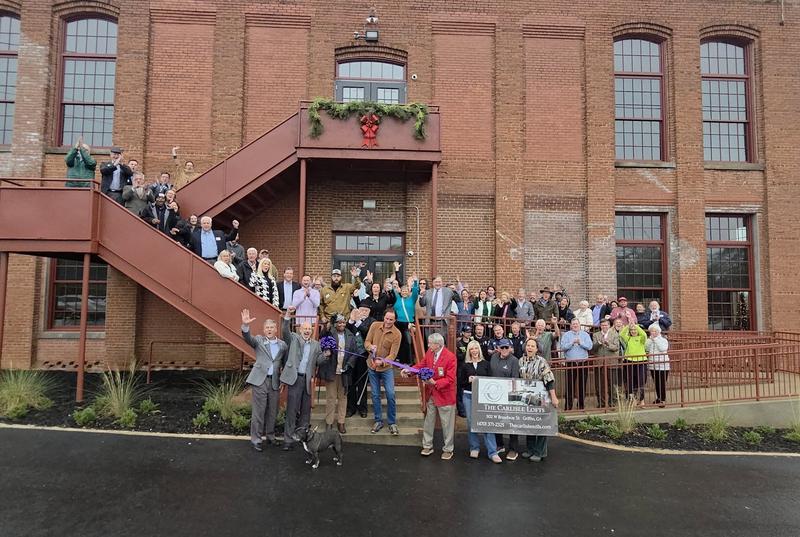
Historic structures sit at the foundation of Georgia’s downtown revitalization strategy. Preserving them is the cheapest form of community infrastructure available. But adaptive reuse costs real money. That is where historic preservation tax credits become essential.
Tax credits can cover up to 45 percent of qualifying project costs, often determining whether a downtown board can move from vision to built reality.
Georgia offers one of the most powerful tax credit incentives in the country. The state combines a 25 percent state credit on top of the federal 20 percent credit for certified historic rehabilitations [1]. Together, they can cover up to 45 percent of qualifying project costs. That kind of financing power often determines whether a downtown board can move from vision to built reality.
Most downtown boards outside Atlanta rarely use these credits strategically. Many do not understand how they work or what role the DDA plays in the process. That is a mistake. Tax credits can unlock major redevelopment projects that would not pencil out otherwise.
How the Credits Work in Practice
The system starts with certification. A property owner or developer identifies a historic structure and submits project plans to the State Historic Preservation Office at UGA. The SHPO reviews the project against the Secretary of Interior Standards for historic preservation. If the work qualifies, the project receives certification for tax credits [2].
Qualified rehabilitation work includes structural repairs, roof replacement, mechanical systems, interior finish restoration, and accessibility improvements. Work that does not contribute to the historic character of the building, such as basement excavation or adding new stories, generally does not qualify.
Tax credits only apply to work that preserves historic character, not to new construction.
Once the project is built and certified, the developer can claim the tax credits on their personal or corporate tax return. A project with $500,000 in qualified costs can generate $100,000 in federal credits and $125,000 in state credits combined. That is $225,000 in tax liability reduction for the developer.
The mechanics matter. Most developers who are too small to absorb the full credit value sell the credits to larger corporations or investment groups at a modest discount, usually 8 to 12 cents on the dollar below face value. A developer with $200,000 in credits might sell them for $170,000 to $180,000 in cash. That cash closes the financing gap and makes the project viable.
Why Downtown Boards Should Care
Tax credits are a private financing tool, not a public one. The developer pursues them, not the board. But your board’s role is critical in three ways.
First, you control zoning, design review, and local designation requirements. Many downtown boards oversee local historic districts. If your local historic district rules are stricter than the Secretary of Interior Standards, you can make profitable projects unprofitable by imposing conditions the SHPO does not require. Know what the Secretary Standards actually allow before imposing local rules [2].
Your local design review can either accelerate tax credit projects or kill them. Know the difference between your rules and SHPO standards.
Second, you can encourage eligible projects. If a downtown property owner approaches you with adaptive reuse plans, you should ask whether the structure qualifies for historic tax credits. Many owners do not know they have this option. Pointing them toward the SHPO application process and connecting them with experienced project architects can accelerate deals.
Third, you can monitor the deal pipeline. A healthy downtown should have a steady flow of tax credit applications moving through SHPO review. If your board sees zero applications in a given year, you may have a zoning problem, a design review problem, or a market problem that the credits cannot solve alone.
Common Pitfalls and What To Watch
The credits work best when developers are genuinely committed to quality preservation. A few risks can derail the value.
The first risk is overcapitalization. A developer might use the credits to fund work that exceeds market demand or creates costs that tenants cannot support through rent. The project finishes beautifully but fails operationally because the financing was too expensive. The credits should reduce development cost, not fund speculative overconstruction.
The second risk is timeline delays. The SHPO review process takes time. If your board’s design review is slow or conditions keep changing, the project timeline extends and financing costs increase. Keep design review crisp and decisive.
The third risk is working with architects who do not understand the Secretary Standards. An experienced preservation architect knows exactly what SHPO will accept and what creates risk. Inexperienced architects often propose work that triggers SHPO objections, delaying certification. Encourage your local design review to recommend certified preservation professionals.
The fourth risk is failing to track outcomes. After a project receives credits and completes, few boards follow up to verify that the building performs as intended. You should ask: Did tenants occupy the space? Is the rent sustainable? Is the owner maintaining the historic fabric? A tax credit that leads to a beautiful but abandoned building is a failure, regardless of the tax subsidy.
Questions Your Board Should Ask
When a developer or property owner mentions historic adaptive reuse, ask targeted questions.
Has the property been reviewed by the State Historic Preservation Office yet? If not, have them schedule a consultation meeting. Do not waste time on projects that do not qualify.
Is the developer experienced with tax credit projects? Check references. Inexperienced developers often underestimate the complexity and timeline.
What is the financing plan if tax credits do not cover the expected amount? Projects sometimes qualify for fewer credits than anticipated. Make sure the developer has a backup.
How will you maintain the historic character after the project opens? Preservation does not stop at opening day. Make sure the owner has a long-term stewardship plan.
Bottom Line
Historic preservation tax credits represent hundreds of millions of dollars in potential downtown investment across Georgia. They are the largest financing tool available to most downtown boards. Understanding how they work, encouraging qualified projects, and monitoring outcomes is essential work.
The credits work best when boards combine them with good design review, zoning clarity, and market discipline. Tax credits alone cannot fix a downtown with weak market demand or prohibitive regulatory barriers. But in a market with genuine development interest, they can turn a struggling historic building into a vibrant adaptive reuse project that generates permanent jobs, tax revenue, and community vitality.
Frequently Asked Questions
The federal credit applies to certified historic rehabilitations nationwide. Georgia's state credit is an additional 25% on top of the federal credit, creating a combined incentive that can cover 45% of qualified project costs. The state credit is unique to Georgia and makes historic rehab much more financially viable.
Yes. If a private historic adaptive reuse project cannot close its financing gap with conventional loans, the developer can apply for tax credits directly. The credits create equity that lenders recognize, making construction financing possible without public grant funds.
Tax credits follow the project, not the developer. If the project doesn't perform as certified, the State Historic Preservation Office can recapture the credits. That creates accountability. Most boards encourage developers to use credits conservatively.
References
- Georgia Department of Community Affairs. (2024). Georgia Historic Rehabilitation Tax Credit Program Summary (O.C.G.A. \S 48-7-29.8). Georgia Historic Preservation Division. https://www.dca.ga.gov/historic-preservation
- Georgia Historic Preservation Division. (2023). Technical Review Guidelines for Historic Building Rehabilitation. Georgia Department of Community Affairs. https://www.dca.ga.gov/historic-preservation