Capital projects in Georgia downtowns often trigger intense debate. Business owners worry about losing parking spots. City councils hesitate to commit Special Purpose Local Option Sales Tax revenue to permanent streetscape changes without proven results. Tactical urbanism solves this problem. By using low-cost, temporary materials to test design changes in real time, you collect hard data, build public support, and prevent costly design mistakes before pouring concrete.
1. What Tactical Urbanism Means for Georgia Municipalities
Tactical urbanism uses short-term, low-cost interventions to test physical changes to streets and public spaces. Instead of spending $500,000 on permanent curb extensions or plaza buildouts, you spend $2,000 to $10,000 on paint, flex posts, planters, and temporary seating.
Why Demonstration Projects Work
- Risk Reduction: You test traffic flows, parking impacts, and pedestrian safety for 7 to 90 days. If a layout fails, you adjust the materials or remove them in hours.
- Data Over Speculation: You replace emotional debates about parking and traffic with actual pedestrian counts, vehicle speed measurements, and sales tax figures.
- Capital Efficiency: Proving a concept with temporary materials strengthens later funding requests through tools like the GDOT Transportation Alternatives Program [1], local SPLOST allocations, and the streetscape ROI approach I outlined in my post on walkability as economic infrastructure.
Temporary trials replace political debate with hard performance data.
2. High-Impact Low-Cost Interventions
Focus your demonstration projects on specific physical changes that improve safety and foot traffic without altering permanent drainage or underground utilities.
Parklets and Curb Extensions
Transform one or two parallel parking spaces in front of restaurants into temporary outdoor dining or public seating using wooden decking and heavy planters. Use paint, rubber curb bumpers, and flexible delineator posts to build temporary curb extensions at intersections. Those curb extensions shorten crossing distances and visually slow turning vehicles.
Pop-Up Plazas and Crosswalks
Convert underutilized pavement or vacant municipal lots into temporary plazas using movable tables, umbrellas, string lights, and temporary surfacing. Use traffic paint or chalk to add high-visibility crosswalks or mid-block crossings along wide downtown corridors.
Protected Micromobility Lanes
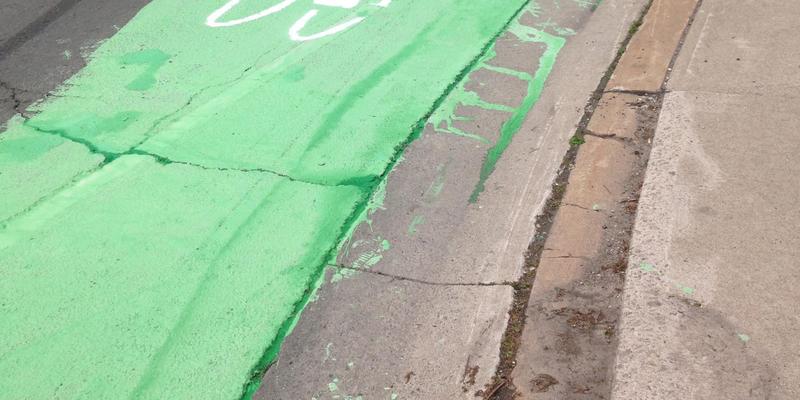
Install temporary bike or golf cart lanes using flexible posts, heavy planter boxes, or temporary rubber barriers to separate rolling traffic from vehicle lanes.
| Intervention Type | Key Temporary Materials | Typical Setup Cost | Target Trial Duration |
|---|---|---|---|
| Parklet / Dining Deck | Planter boxes, wooden platforms, outdoor furniture | $1,500 - $5,000 | 30 to 90 days |
| Curb Extensions | Traffic paint, flex posts, rubber curbing | $500 - $2,000 | 14 to 30 days |
| Pop-Up Public Plaza | Movable tables, umbrellas, string lighting, temporary surfacing | $2,000 - $8,000 | 1 to 7 days |
| Protected Bike / Cart Lane | Flex posts, temporary paint, rubber barriers | $1,000 - $4,000 | 14 to 60 days |
3. Case Study: Macon Connects
To see tactical urbanism operating at scale in Georgia, look to Macon. 8 80 Cities describes Macon Connects as a locally led initiative led by NewTown Macon in partnership with Macon-Bibb County, Macon Urban Development Authority, Main Street Macon, and Bike Walk Macon [2]. The effort used temporary infrastructure to test whether street space could be reallocated more safely and productively.
Real-world trials convert skeptical engineers into long-term infrastructure partners.
The Implementation
According to Streetsblog’s reporting on the project, the Macon demonstration used volunteer labor and temporary materials to test multiple bike-lane designs through downtown streets [3]. The installation gave local officials an immediate way to observe traffic movement, safety behavior, and public reaction before making permanent changes.
The Measurable Result
The key result was a temporary pilot that helped move permanent infrastructure forward. Streetsblog reported that the demonstration helped win support for permanent bike-lane installation on Walnut Street after public officials reviewed how the trial performed [3]. That is exactly why downtown boards should treat pilots as a pre-construction due diligence tool, much like the site-testing mindset I outlined in my adaptive reuse playbook for Georgia projects.
4. Data Collection Protocol: Proving Success
Do not launch a trial without a baseline measurement plan. You need data before, during, and after installation to justify permanent investments to your city council or Downtown Development Authority.
Metrics to Measure During Trials
- Pedestrian Foot Traffic and Dwell Time: Deploy manual counters or mobile location analytics to track pedestrian volumes and average stay times.
- Vehicle Speeds and Yield Rates: Measure traffic speeds before and after installing curb extensions. Count the percentage of drivers who yield to pedestrians at crossings.
- Merchant Sales Impact: Survey downtown businesses inside the test area weekly. Track changes in weekend foot traffic and reported sales trends.
- Parking Turnover Rates: Track occupancy and turnover on remaining parking spaces. Demonstrating that nearby parking still functions is often the fastest way to neutralize merchant resistance.
5. Navigating Georgia Regulatory Guardrails
Executing a temporary project still requires legal and operational discipline.
City Right-of-Way vs. GDOT State Routes
If your trial takes place on a city-owned street, your city can usually authorize it through a local permit, staff approval, or temporary resolution. If your project touches a state route running through downtown, coordinate early with GDOT. Temporary materials in state right-of-way should be treated as a real permitting issue, not an informal weekend experiment.
Safety and Accessibility Rules
- MUTCD Compliance: Temporary traffic control devices should follow the Manual on Uniform Traffic Control Devices [4] so posts, markings, and signage stay legible and defensible.
- ADA Standards: Maintain a clear continuous accessible path through sidewalks and temporary ramps consistent with current ADA guidance from the U.S. Access Board [5].
- Emergency Access: Preserve clear travel widths so fire, police, sanitation, and delivery vehicles can still move through the corridor safely.
6. Overcoming Merchant and Council Resistance
Pushback usually comes from fear of lost revenue, lost parking, or traffic backups. The best response is a disciplined trial structure.
1. Set Fixed Trial Dates
Tell merchants exactly when the installation starts and ends. A pilot with a clear removal date is easier to support than an open-ended experiment.
2. Form a Merchant Advisory Group
Bring business owners into the design phase. Let them help shape planter placement, seating layouts, and the best timing for the demonstration.
3. Publish Results Quickly
Share trial metrics within two weeks of project completion. If the pilot increased foot traffic, improved safety behavior, or preserved parking turnover better than expected, show that evidence immediately. The faster you move from speculation to proof, the easier it becomes to justify permanent capital spending or even larger deal structures like the downtown partnership structures I discussed in my Georgia public-private partnership post.
Frequently Asked Questions
It is the use of low-cost, temporary materials such as paint, flex posts, planters, and movable seating to test street or public-space design changes before committing permanent capital funds.
A pilot reduces political and financial risk by generating real-world data on traffic flow, pedestrian activity, parking impacts, and merchant response before concrete is poured.
Track pedestrian counts, dwell time, vehicle speeds, parking turnover, merchant feedback, and if possible sales performance before, during, and after the demonstration.
References
- Georgia Department of Transportation. (2024). Transportation Alternatives Program. Georgia Department of Transportation. https://www.dot.ga.gov/GDOT/Pages/TAP.aspx
- 8 80 Cities. (2017). Macon Connects. 8 80 Cities. https://www.880cities.org/portfolio_page/macon-connects/
- Schmitt, Angie. (2017). Bike Lane Pop-up in Macon, Georgia, Wins Over County Engineer, Goes Permanent. Streetsblog USA. https://usa.streetsblog.org/2017/07/12/bike-lane-pop-up-in-macon-georgia-wins-over-county-engineer-goes-permanent
- Federal Highway Administration. (2023). Manual on Uniform Traffic Control Devices for Streets and Highways. U.S. Department of Transportation. https://mutcd.fhwa.dot.gov/
- United States Access Board. (2020). ADA Accessibility Guidelines for Buildings and Facilities (ADAAG). U.S. Access Board. https://www.access-board.gov/