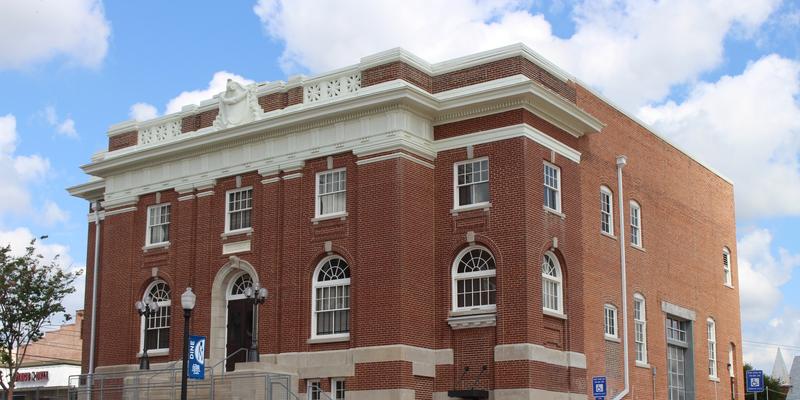
Converting abandoned commercial real estate in Georgia into income-producing assets requires disciplined financial structuring, precise due diligence, and aggressive risk management. Ground-up developments rely on predictable site parameters. Adaptive reuse forces you to solve physical and legal puzzles inside existing structures. This guide outlines practical steps to transform high-risk, blighted Georgia properties into bankable real estate investments. These principles become even more important when public land control or incentive agreements are in play.
1. Site Selection and Physical Due Diligence
Do not purchase an existing asset based on visual appeal or surface condition. Evaluate physical limits and regulatory programs before making an offer or placing non-refundable earnest money into escrow.
Structural Capacity and Geometry
- Floor Load Rating: Historic industrial and warehouse buildings in Georgia usually hold live loads between 100 and 250 pounds per square foot (psf). Residential conversions require a minimum capacity of 40 psf live load plus partition allowances [1]. Verify live load limits with a structural engineer before changing building use.
- Column Grid Spacing: Grid dimensions of 20 by 20 feet or 20 by 25 feet fit residential unit layouts efficiently. Grid spacings below 15 feet require structural modifications that significantly raise hard costs.
- Floor-to-Ceiling Clearances: Look for vertical heights of at least 11 feet slab-to-slab. Dropped ceilings, mechanical ducts, and plumbing lines consume 2 to 3 feet of vertical room, leaving clear ceiling heights of 8 to 9 feet.
Environmental Assessment and Remediation
Blighted assets often contain hazardous materials. Your due diligence must quantify remediation expenses during option periods. Conduct testing in accordance with ASTM E1527-21 Standard Practice for Environmental Site Assessments [2].
| Due Diligence Item | Key Requirement | Estimated Cost Range |
|---|---|---|
| Phase I Environmental Site Assessment (ESA) | Identifies Recognized Environmental Conditions (RECs) | $3,500 - $6,000 |
| Phase II Subsurface Testing | Soil gas sampling and core borings for VOCs and heavy metals | $7,500 - $25,000 |
| Hazardous Building Materials Survey | Tests for asbestos-containing materials, lead paint, and PCBs | $4,000 - $10,000 |
| Structural Integrity Analysis | Concrete core sampling and structural steel corrosion inspection | $8,000 - $18,000 |
| Zoning & Code Audit | Verifies change-of-use rights, parking minimums, and local ordinance compliance | $3,000 - $6,000 |
Remediation Benchmark: Budget between $15 and $45 per square foot for interior asbestos abatement and lead encapsulation in commercial properties constructed before 1978.
Georgia Brownfield Program Incentive: Apply for a limitation of liability under the Georgia Hazardous Site Reuse and Redevelopment Act (O.C.G.A. § 12-8-200) through the Georgia Environmental Protection Division Brownfields Unit [3]. This program allows you to freeze the ad valorem property tax assessment for up to 10 years to recover eligible cleanup costs.
2. Structuring the Georgia Capital Stack
Adaptive reuse projects cost 10% to 25% more per square foot than standard new construction because of unknown physical conditions. You cannot rely on standard bank loans alone. You must stack private debt with Georgia state incentives, municipal programs, and tax equity to lower your effective cost of capital. In downtown districts, that usually means combining building-level due diligence with the same redevelopment funding tools discussed in my posts on Tax Allocation Districts and walkability-focused streetscape ROI.
Primary Funding Sources in Georgia
- Senior Debt: Commercial banks fund 50% to 60% of Total Development Cost (TDC). Expect strict coverage metrics, including a minimum Debt Service Coverage Ratio (DSCR) of 1.25x to 1.35x and loan-to-cost (LTC) limits of 60%.
- Federal Historic Tax Credit (HTC): Governed by 26 U.S. Code § 47, this program provides a 20% federal tax credit on Qualified Rehabilitation Expenditures (QRE) for certified historic structures [4]. Monetize these credits by partnering with corporate tax equity investors, generating $0.85 to $0.92 per credit dollar.
- Georgia Historic Rehabilitation Tax Credit (HRTC): Governed by O.C.G.A. § 48-7-29.8, this state credit provides 25% of QRE (up to 30% in target areas) [5]. The state caps commercial projects at $30 million annually across all statewide applicants. Combine state and federal historic credits to cover 35% to 45% of total hard costs.
- DCA Downtown Development Revolving Loan Fund (DDRLF): The Georgia Department of Community Affairs DDRLF Program [6] offers low-interest loans up to $250,000 per project for historic commercial downtown areas. Use this funding to bridge gap financing for real estate acquisition and building rehabilitation.
- Georgia Cities Foundation (GCF) Revolving Loan Fund: Partner the DCA DDRLF with the Georgia Cities Foundation Revolving Loan Program [7].
- Tax Allocation Districts (TADs): Established under the Georgia Redevelopment Powers Law (O.C.G.A. § 36-44-1), TADs capture future property tax increases generated by your project [8]. Municipalities issue TAD bonds or enter reimbursement agreements to fund public infrastructure, site preparation, and utility connections.
- DCA CDBG Redevelopment Fund (RDF): Cities can apply for Georgia Community Development Block Grant Redevelopment Fund assistance [9]. This program provides grants or low-interest loans up to $1,000,000 for projects targeting slum and blight removal.
- Georgia Opportunity Zone Job Tax Credits: If your project falls within a DCA-designated Opportunity Zone (O.C.G.A. § 48-7-40.1), creating two or more jobs earns a state job tax credit of $3,500 per job annually for up to five years [10]. You can apply this credit against Georgia income tax and state payroll withholding tax.
Sample $10 Million Georgia Capital Stack Breakdown
| Source | Capital Share | Amount ($) | Terms / Details |
|---|---|---|---|
| Senior Debt | 50% | $5,000,000 | 7.5% interest rate, 25-year amortization |
| Federal HTC Equity | 16% | $1,600,000 | Syndicated at $0.88 net equity rate |
| Georgia State HRTC Equity | 12% | $1,200,000 | Syndicated at $0.85 net equity rate |
| DCA DDRLF + GCF Loan Combo | 5% | $500,000 | Below-market interest rates, 10-year terms |
| TAD Reimbursement / CDBG RDF | 7% | $700,000 | Infrastructure offset / 3% fixed loan |
| Sponsor Equity | 10% | $1,000,000 | Target Internal Rate of Return (IRR): 16% - 18% |
| Total Project Cost | 100% | $10,000,000 | Weighted Average Cost of Capital: ~5.2% |
3. Risk Mitigation and Georgia-Specific Rules
Hidden building defects erode returns. Execute defensive contract strategies and secure local property tax freezes to protect your cash flow.
- Set High Contingency Rates: Maintain a hard cost contingency of 15% to 20% prior to starting construction. Standard ground-up projects use 5% to 10%. Reduce your contingency to 10% only after selective demolition opens up wall cavities and floor structures.
- Use Guaranteed Maximum Price (GMP) Contracts: Avoid cost-plus or time-and-materials agreements. Require your general contractor to sign a GMP contract once construction documents reach 90% completion.
- Execute Early Selective Demolition: Allocate $50,000 to $150,000 for early selective demolition during your option period or immediately after loan closing.
- Secure Georgia Historic Preservation Division (HPD) Approvals: Submit Part 1 and Part 2 applications to the Georgia Historic Preservation Division and the National Park Service before construction [11].
- Secure Georgia Preferential Property Tax Assessment for Historic Property: Apply through your county tax assessor for Georgia’s preferential assessment law (O.C.G.A. § 48-5-7.2) [12].
4. Construction Execution and Asset Stabilization
Delays increase carrying costs and risk violating tax credit delivery schedules. Track progress milestones to guarantee a smooth transition to permanent operations.
- Schedule Allocations: Set realistic timelines of 14 to 22 months for construction, depending on gross floor area and environmental complexity.
- Pre-Leasing Timeline: Start pre-leasing residential or commercial units 90 days before securing your Certificate of Occupancy (CO).
- Job Tax Credit Compliance: Track new full-time employee positions to claim Georgia Opportunity Zone credits on state tax filings.
- Permanent Refinancing: Refinance construction debt after achieving 90% occupancy for 90 consecutive days, replacing high-cost debt with fixed-rate permanent loans.
References
- International Code Council. (2023). 2024 International Building Code (IBC). https://codes.iccsafe.org/content/IBC2024P1
- ASTM International. (2021). Standard Practice for Environmental Site Assessments: Phase I Environmental Site Assessment Process (E1527-21). ASTM International. https://www.astm.org/e1527-21.html
- Georgia Environmental Protection Division. (2023). Georgia Hazardous Site Reuse and Redevelopment Act Guidelines (Brownfield Program). Georgia Department of Natural Resources. https://epd.georgia.gov/brownfields
- Internal Revenue Service. (2022). 26 U.S. Code \S 47 - Rehabilitation Credit. https://www.law.cornell.edu/uscode/text/26/47
- Georgia Department of Community Affairs. (2024). Georgia Historic Rehabilitation Tax Credit Program Summary (O.C.G.A. \S 48-7-29.8). Georgia Historic Preservation Division. https://www.dca.ga.gov/historic-preservation
- Georgia Department of Community Affairs. (2024). Downtown Development Revolving Loan Fund (DDRLF) Guidelines. Georgia Department of Community Affairs. https://dca.georgia.gov/search/results
- Georgia Cities Foundation. (2024). Revolving Loan Fund Program Specifications. https://www.georgiacitiesfoundation.org/
- General Assembly of Georgia. (2022). Redevelopment Powers Law (O.C.G.A. \S 36-44-1 et seq.). https://law.justia.com/codes/georgia/2022/title-36/chapter-44/
- Georgia Department of Community Affairs. (2024). CDBG Redevelopment Fund (RDF) Program Statement. Georgia Department of Community Affairs. https://dca.georgia.gov/search/results
- Georgia Department of Community Affairs. (2023). Georgia Opportunity Zone Tax Credit Program Overview (O.C.G.A. \S 48-7-40.1). Georgia Department of Community Affairs. https://dca.georgia.gov/search/results
- Georgia Historic Preservation Division. (2023). Technical Review Guidelines for Historic Building Rehabilitation. Georgia Department of Community Affairs. https://www.dca.ga.gov/historic-preservation
- General Assembly of Georgia. (2022). Preferential Assessment for Historic Property (O.C.G.A. \S 48-5-7.2). https://law.justia.com/codes/georgia/2022/title-48/chapter-5/article-1/section-48-5-7-2/