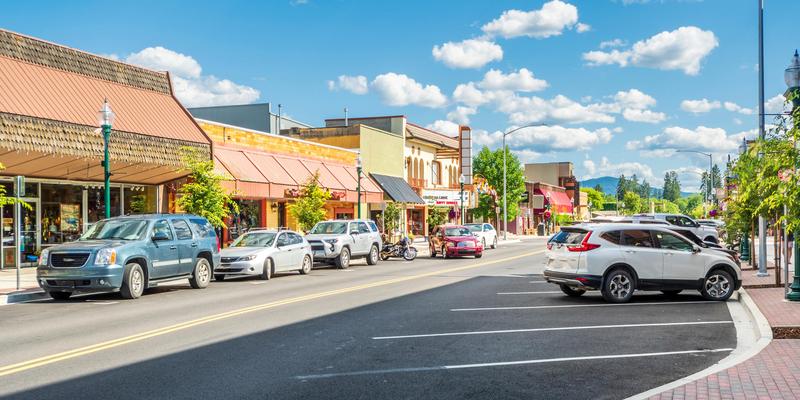
When local leaders say a downtown needs more parking, they are usually responding to a real frustration. Someone parked farther away than they wanted. A business owner saw a full curb line at lunch. A property owner worries that a new apartment or restaurant project will overwhelm the existing supply. But those observations do not automatically mean a city should fund a new lot or deck.
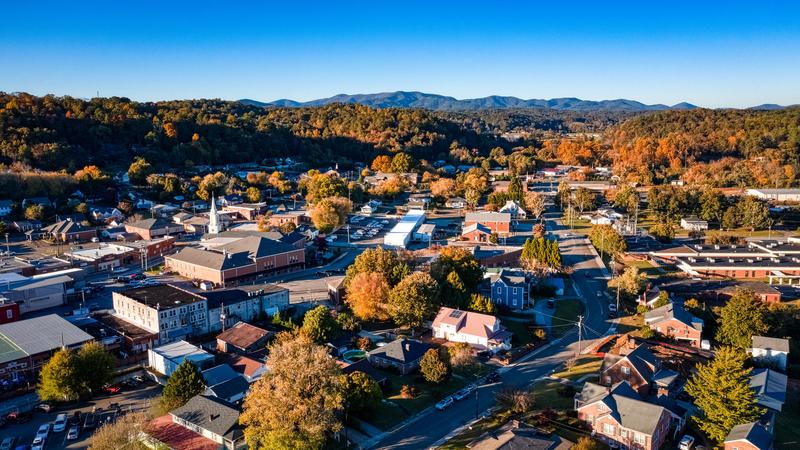
In many Georgia downtowns, the real problem is not total supply. It is distribution, duration, and expectations. A district can feel “full” even while available spaces sit one block away or remain underused on side streets. Before spending redevelopment dollars on new supply, public boards should treat parking as a management system first, a capital project second.
1. Downtown Parking Is an Economic Access Question
Parking matters because it affects whether people can conveniently reach businesses, offices, events, and housing. But good downtown parking policy is not the same thing as maximizing the number of spaces directly in front of every destination.
Main Street America has consistently framed successful downtown districts around productive mixed-use activity, walkability, and business support rather than auto storage alone [1]. Smart Growth practice reaches the same conclusion: the goal is to support access while preserving a compact, active environment [2].
The right question is not “How much parking can we build?” but “How easily can people reach downtown destinations?”
2. What a Useful Parking Study Should Measure
Weak parking studies start with a conclusion and work backward. They assume new supply is needed, then document complaints that justify expansion. Better studies begin with observable behavior.
At minimum, a downtown parking study should document:
- Peak occupancy by block face and time window rather than district-wide averages alone.
- Employee parking patterns, especially whether all-day users occupy prime customer spaces.
- Turnover rates in short-term spaces near restaurants, retail, and service businesses.
- Walk distance tolerance between where people park and where they are willing to go on foot.
- Special-event conditions separately from normal weekday and weekend demand.
If the district has not measured those things, it has not really diagnosed the problem.
3. The Lowest-Cost Fixes Usually Come First
In a smaller downtown, the first round of solutions is usually operational:
| Problem | Lower-Cost Management Response | Capital-Heavy Response |
|---|---|---|
| Prime spaces filled all day by employees | Move staff parking to secondary streets or public lots | Build more front-door parking |
| Customers cannot find available spaces | Improve wayfinding and shared-parking communication | Acquire land for a new lot |
| High turnover uses lack convenient spaces | Add short-term time limits in a few strategic areas | Construct structured parking |
| Special events temporarily strain demand | Use event traffic plans and overflow lots | Overbuild permanent supply |
These management steps cost far less than land acquisition or paving. They also preserve more taxable land for productive uses like buildings, patios, retail, or housing.
4. New Parking Supply Has a Real Opportunity Cost
Every public lot is also a redevelopment decision. A site used for long-term parking is a site not used for storefronts, housing, office space, or taxable private investment. That tradeoff matters more in a historic downtown than it does in a greenfield commercial corridor.
This is why parking decisions should be evaluated alongside the same return-on-investment logic I discussed in my posts on walkability as economic infrastructure and Tax Allocation District funding. A city that spends redevelopment dollars on parking should be able to explain why that land use produces greater public value than the alternatives.
5. When More Parking Really Is the Right Answer
Sometimes the conclusion really is that more supply is needed. But that conclusion should be earned.
New parking construction makes sense when a district can show:
- sustained peak occupancy across the most relevant time windows,
- limited practical opportunities to reassign employee parking,
- clear business or residential demand that cannot be absorbed through turnover or shared use,
- and a funding plan that covers both construction and long-term maintenance.
If those conditions are not present, a new lot may solve a political complaint without solving the real downtown access problem.
The most effective small-downtown parking strategy is usually boring: measure demand honestly, manage the supply you already have, improve walking conditions, and preserve prime land for productive redevelopment until the data clearly says otherwise.
Frequently Asked Questions
Often they have a parking management problem instead. Spaces may exist, but they are unevenly distributed, poorly signed, or occupied for long periods by employees rather than customers.
It should measure occupancy by block and time of day, employee parking behavior, turnover, walk distance, and whether better management could improve use of the existing inventory.
Usually only after a district has documented sustained peak demand, exhausted lower-cost management options, and identified a realistic funding source for both construction and long-term maintenance.
References
- Main Street America. (2024). Main Street America Impact. Main Street America. https://mainstreet.org/about/main-street-america-impact
- Smart Growth Network. (2024). This Is Smart Growth. Smart Growth Network. https://smartgrowth.org/what-is-smart-growth/